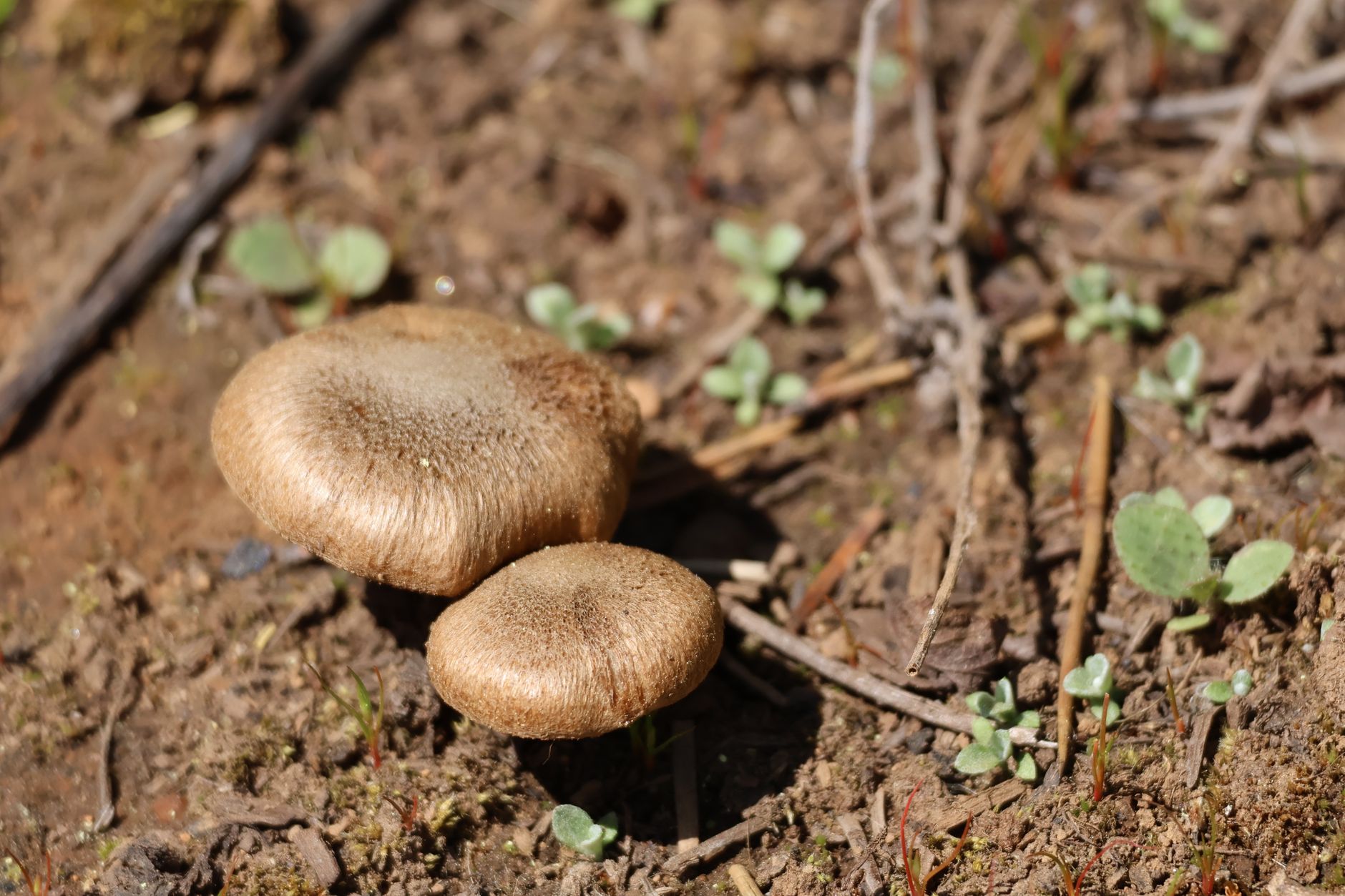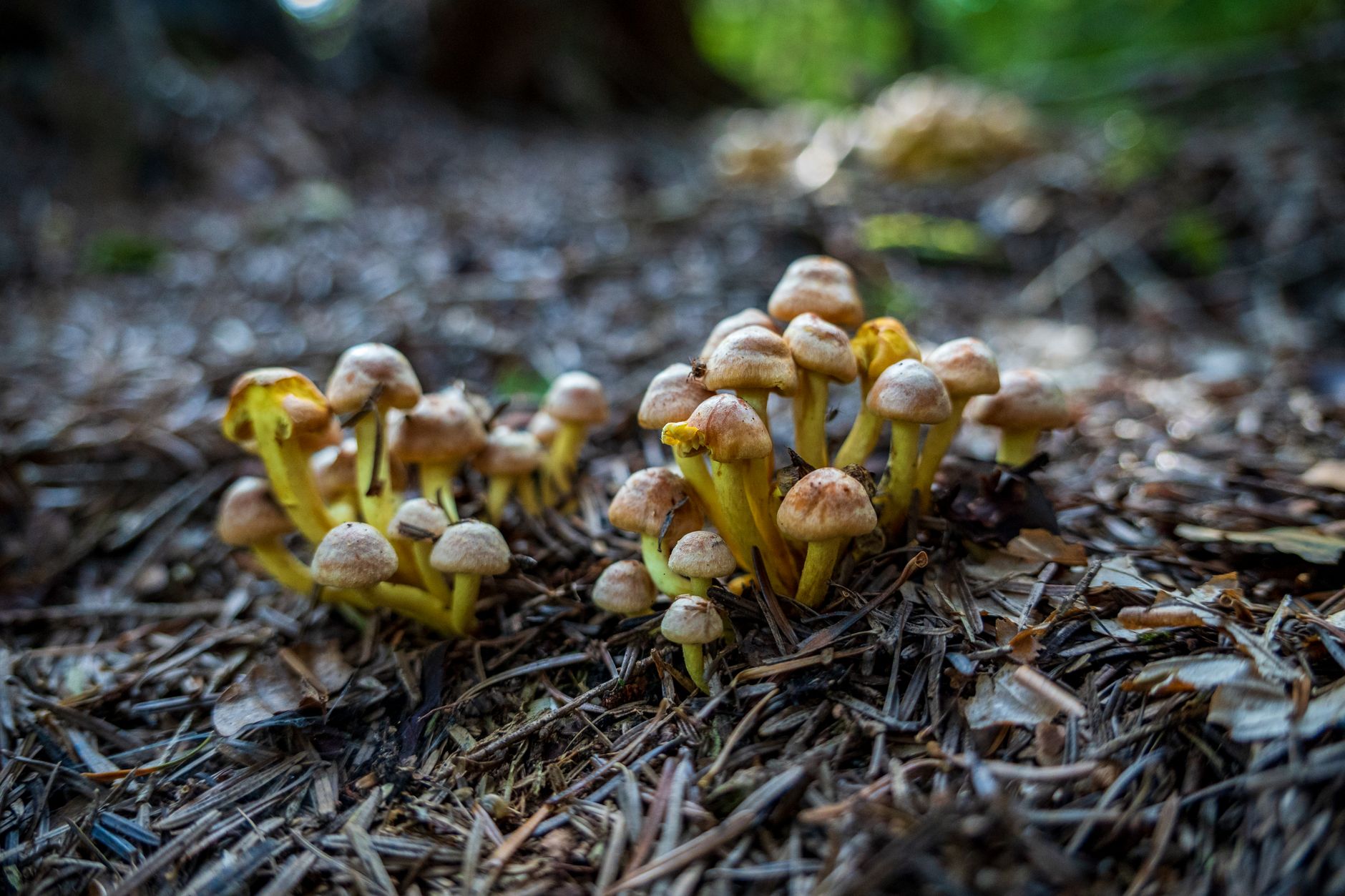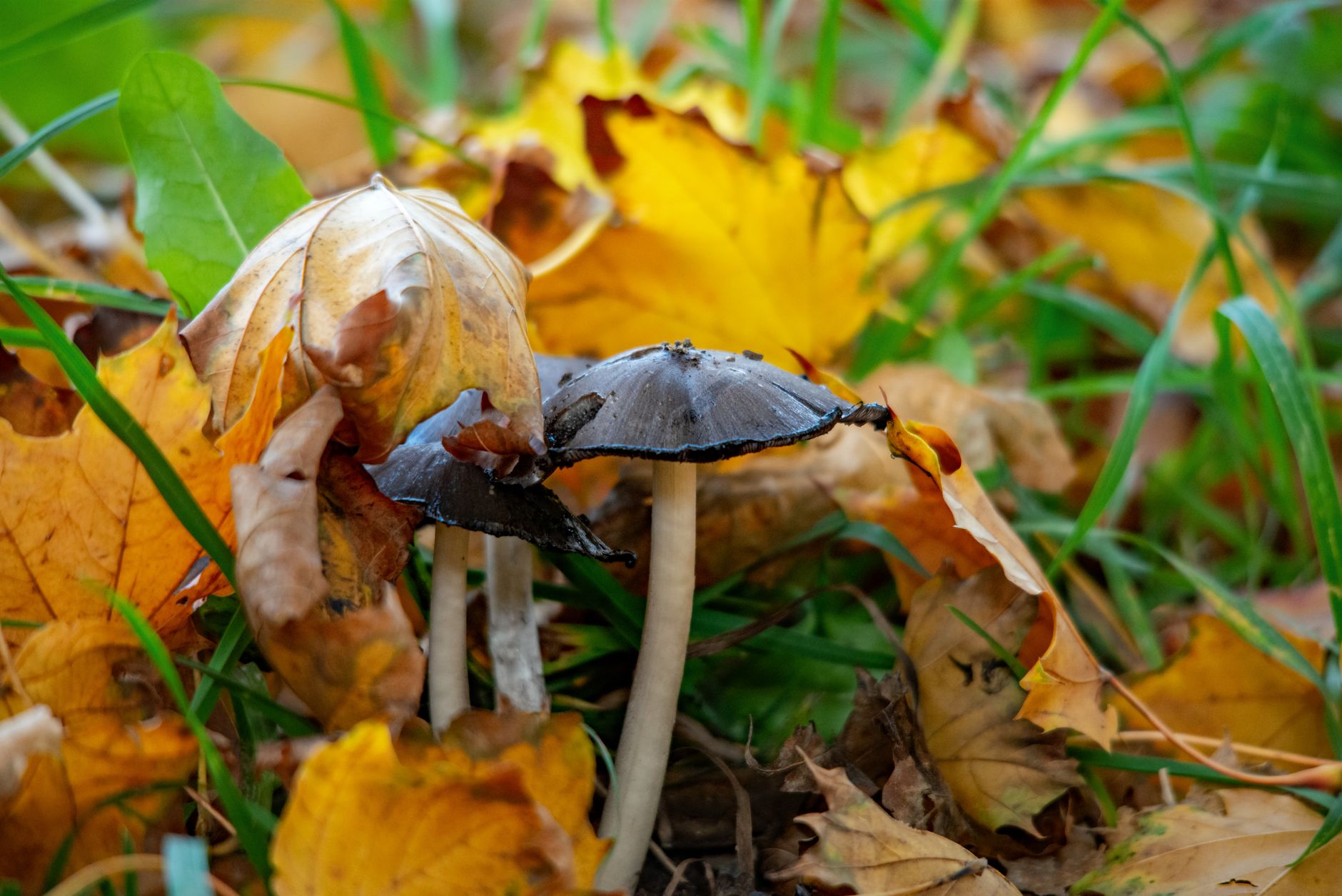
Type green mushroom into a search engine and you will land in two very different worlds. One is a forager’s world, full of strange species with emerald caps and jade stalks. The other is a grower’s world, where green almost never means a mushroom at all. It means a mold colony moving across a substrate block faster than your mycelium can defend it. The two get mixed up constantly, which is why beginners either panic about a crop that was doomed from the start or get curious about eating something they should leave alone. This guide sorts out both meanings of the term so you know exactly what you are looking at.
If you are a home cultivator, the green thing you will actually meet is Trichoderma, a genus of mold that feeds on the same sugars your mushroom mycelium wants. It shows up as a fuzzy white patch that turns green as it begins releasing spores. Under warm room temperatures, that whole transition can happen in two to three days. The mold does not care that you spent a month colonizing a block. It simply outcompetes your culture, and once spores are loose, every block in the same room is at risk. Learning to read that green patch early is one of the most useful skills a beginner can build, and our mushroom contamination identification guide walks through the full picture.
Real green mushrooms do exist. Waxcaps, brittlegills, elfcups and a few boletes carry green or blue-green pigments, and a handful of them are genuinely good eating. Almost none of them are practical to grow indoors. Most are mycorrhizal, meaning they live in a partnership with tree roots that is very hard to copy in a plastic tub. The few that break down wood, like the green elfcup, are tiny, slow and not worth the shelf space. Identification matters here too. Never eat a wild mushroom unless an expert has positively identified it. The North American Mycological Association runs local forays and identification help that is far more reliable than an app on your phone.
| Green Thing | What It Really Is | Edible? | Growable at Home? |
|---|---|---|---|
| Green mold (Trichoderma) | A mold, not a mushroom | No, discard the block | No, it is a contaminant |
| Parrot waxcap | Wild grassland waxcap | Not recommended | No, waxcaps need old grassland |
| Verdigris agaric | Wild blue-green capped mushroom | Not recommended, upset reported | No, not a wood-rotter for indoor blocks |
| Green brittlegill | Wild mycorrhizal mushroom | Yes in some regions, cooked | No, needs living tree roots |
| Green elfcup | Tiny wood-staining cup fungus | Inedible, too small and woody | Technically yes, rarely worth it |
| Green-cracked bolete | Wild mycorrhizal bolete | Yes when cooked and properly identified | No, needs a host tree |
What Does Green Mushroom Actually Mean to a Grower?
Three different things get called a green mushroom, and only one of them belongs in a grow room.
The first is contamination. Green mold, mostly Trichoderma and occasionally Penicillium, is the most common intruder in home grows. It starts as a white fluffy patch and turns vivid green once the spores mature. If you have watched a green patch spread across a substrate block, you have watched this mold work. Treat that block as a loss rather than a challenge to fight.
The second meaning is literal. A small group of wild species really does produce green fruit bodies. The parrot waxcap, the verdigris agaric, the green brittlegill and a few boletes carry green and blue-green pigments. They are beautiful, and almost all of them are off limits to indoor growers because of how they feed themselves.
The third meaning is marketing. Some vendors describe oyster strains as green when the caps are really grey with a blue tint that shifts under different light. The color is real, but it is a shade, not a species group. Knowing which of the three meanings you are dealing with saves a lot of wasted time and a few wasted blocks.
Which Mushrooms Really Do Grow Green?
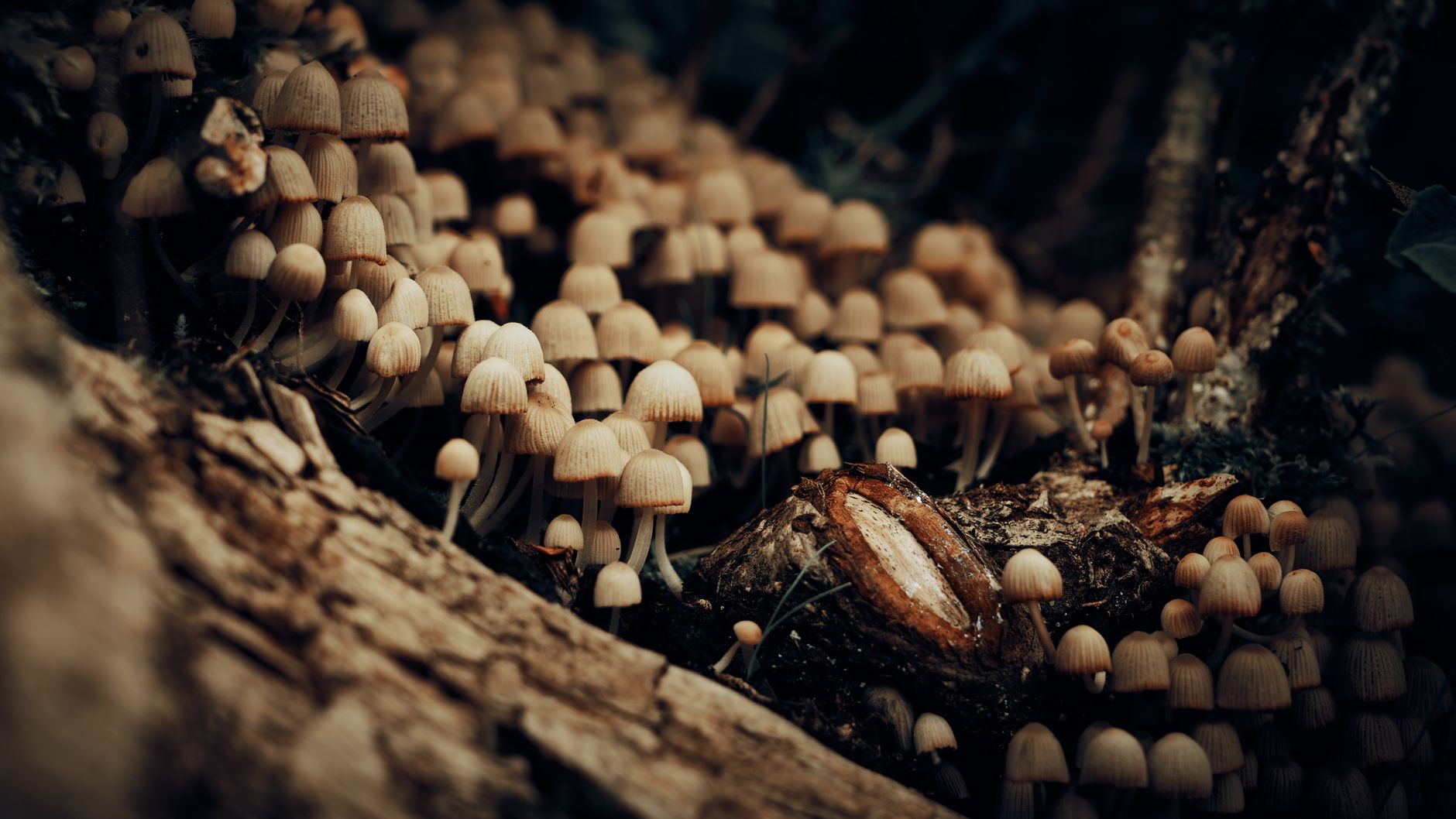
Real green mushrooms are overwhelmingly wild. The parrot waxcap (Gliophorus psittacinus) is a small, slippery grassland species that shifts from yellow-green to emerald as it ages. The verdigris agaric (Stropharia aeruginosa) wears a blue-green cap dotted with white flecks and grows on wood chips, lawns and path edges. The green brittlegill (Russula virescens) looks like a green-painted cracker sitting on the forest floor, and in parts of Europe it is a prized edible.
A few others are worth knowing by name. The green elfcup (Chlorociboria aeruginascens) is a tiny disc that stains rotting wood a deep blue-green, and that stained wood has been used in decorative woodwork for centuries. The green-cracked bolete (Xerocomellus chrysenteron) shows an olive-brown cap that cracks open to reveal pinkish flesh underneath.
Here is the part that matters to a cultivator. Nearly every one of these species is mycorrhizal, meaning it lives in a partnership with living tree roots. You cannot recreate that relationship in a tub of sawdust. The green elfcup does break down wood, but it fruits as tiny discs on bare logs and would take months or years to reward you. If your goal is a harvest, green is the wrong color to chase.
Why Is Green Mold More Common Than Any Green Mushroom?
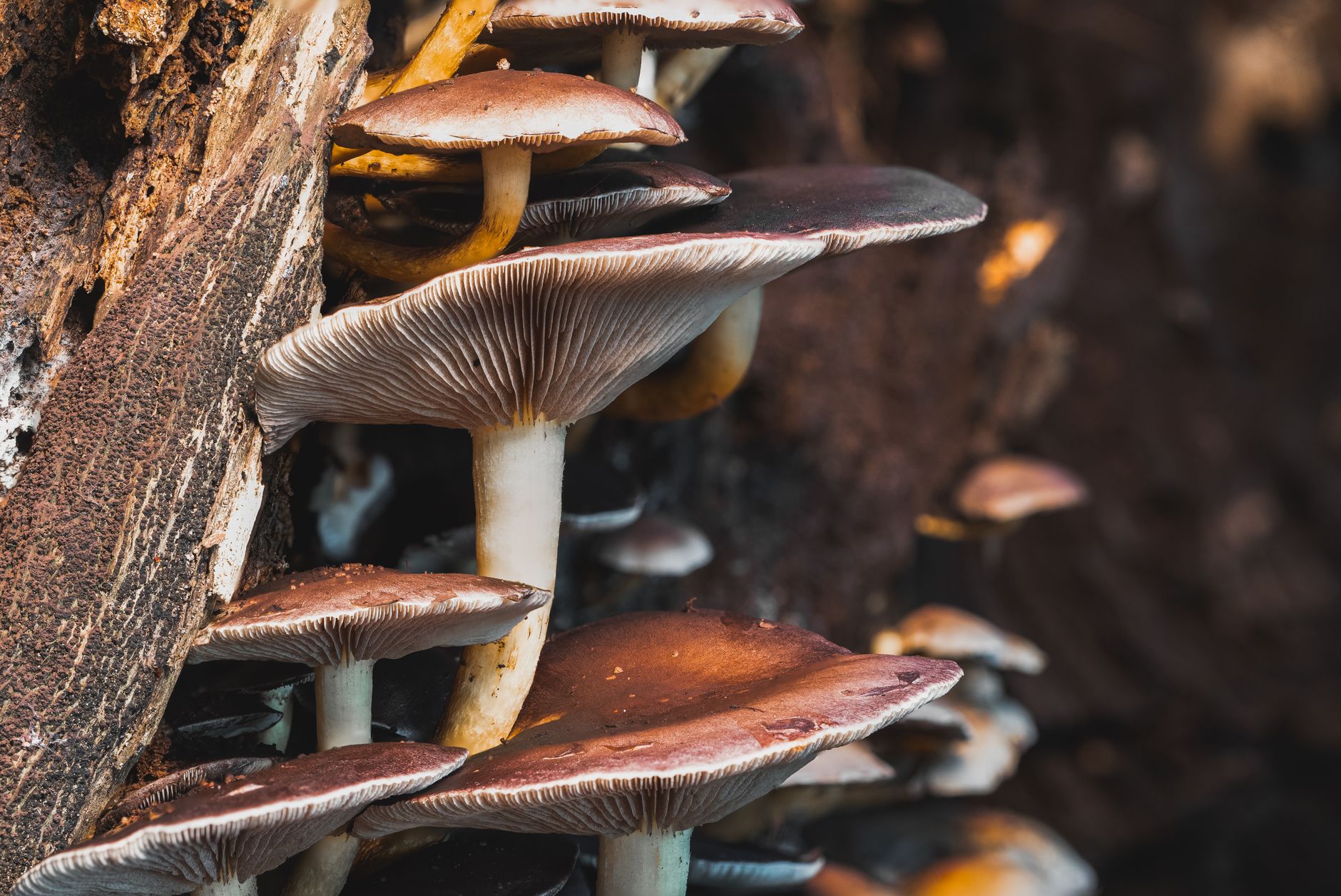
Green mold wins because it is built for the conditions you create. Trichoderma likes warmth, moisture and simple sugars. Supplemented sawdust and grain spawn are essentially a buffet. At temperatures near 75 F, a single spore can turn into a visible green patch in 48 to 72 hours. Your oyster or lion’s mane culture, by contrast, usually needs 10 to 21 days to fully colonize a block before it can fruit. That gap is where beginners lose crops.
Spore load makes it worse. One sporulating patch can release millions of spores into the air of your fruiting space, and those spores settle on every exposed surface. They ride air currents, hitchhike on sleeves and travel on pet fur. This is why a single green block in a shared closet often becomes three. If you have already lost a kit this way, our breakdown of why grow kits get contamination covers the usual causes.
Substrate preparation is the other half of the story. Grain that was not fully sterilized, straw that was pasteurized unevenly, or bags that sat warm for a week before spawning all give mold a head start. Grower surveys and production reporting keep pointing at the same cluster of causes. Our roundup of mushroom cultivation statistics collects that data in one place, and the pattern is consistent year after year.
Once a block is green, the USDA takes a simple position on moldy food. Its food safety guidance is to discard it rather than trim around the mold, because mold filaments and spores extend well past what you can see. A contaminated block belongs in a sealed bag and then in the trash or compost, not on your kitchen counter.
How Do You Tell Green Mold Apart From an Actual Green Mushroom?
You can usually separate a mold colony from a mushroom with four quick checks.
Texture comes first. Green mold looks powdery or fuzzy and it flattens against the surface it grows on. Mushroom mycelium looks like white threads or cotton. A green mushroom has structure, which means a stem, a cap, gills, pores or a cup.
Location is next. Mold appears on the substrate, on grain, on the bag, on the filter patch, even on the shelf. Mushrooms push up out of the substrate and grow away from it. If green shows up in a ring at the base of a block or spreads outward from one point, that is mold.
Spore color and smell finish the job. Trichoderma spores are green and dry. When disturbed they puff like dust. A mushroom drops spores from gills or pores, and those spores are usually white, purple-brown or pink. A healthy block smells like mushrooms or fresh bread. A contaminated block smells sour, musty or like a wet cellar.
One safety note applies to every wild mushroom, green or not. Never eat a wild mushroom unless an expert has positively identified it. Color, smell and a phone app are not identification. Contact a local mycological group through the North American Mycological Association if you want a real answer from a real person.
- Powdery, flat, spreading patch means mold. A stem, cap and gills mean mushroom.
- Green creeping up the base of a block means contamination. A green cap on a stalk in the woods means a wild species.
- Dry green spores that puff when touched point to Trichoderma. Spores falling from gills point to a mushroom.
- A sour or musty smell points to contamination. A clean mushroom or bread smell points to a healthy culture.
Can You Grow a Green Mushroom at Home?
Can you grow a genuinely green mushroom at home? For most species the answer is no, and the reason is biological rather than technical. Mycorrhizal mushrooms need a living host. Green brittlegills associate with oak and beech. Waxcaps associate with old, unimproved grassland. You cannot bottle that relationship in a monotub, and outdoor attempts take years before they either work or fail.
The green elfcup is the exception that proves the point. It does digest wood, and growers have fruited it on prepared logs, but the fruit bodies are the size of a shirt button and appear slowly. It is a project for someone who enjoys the process more than the plate.
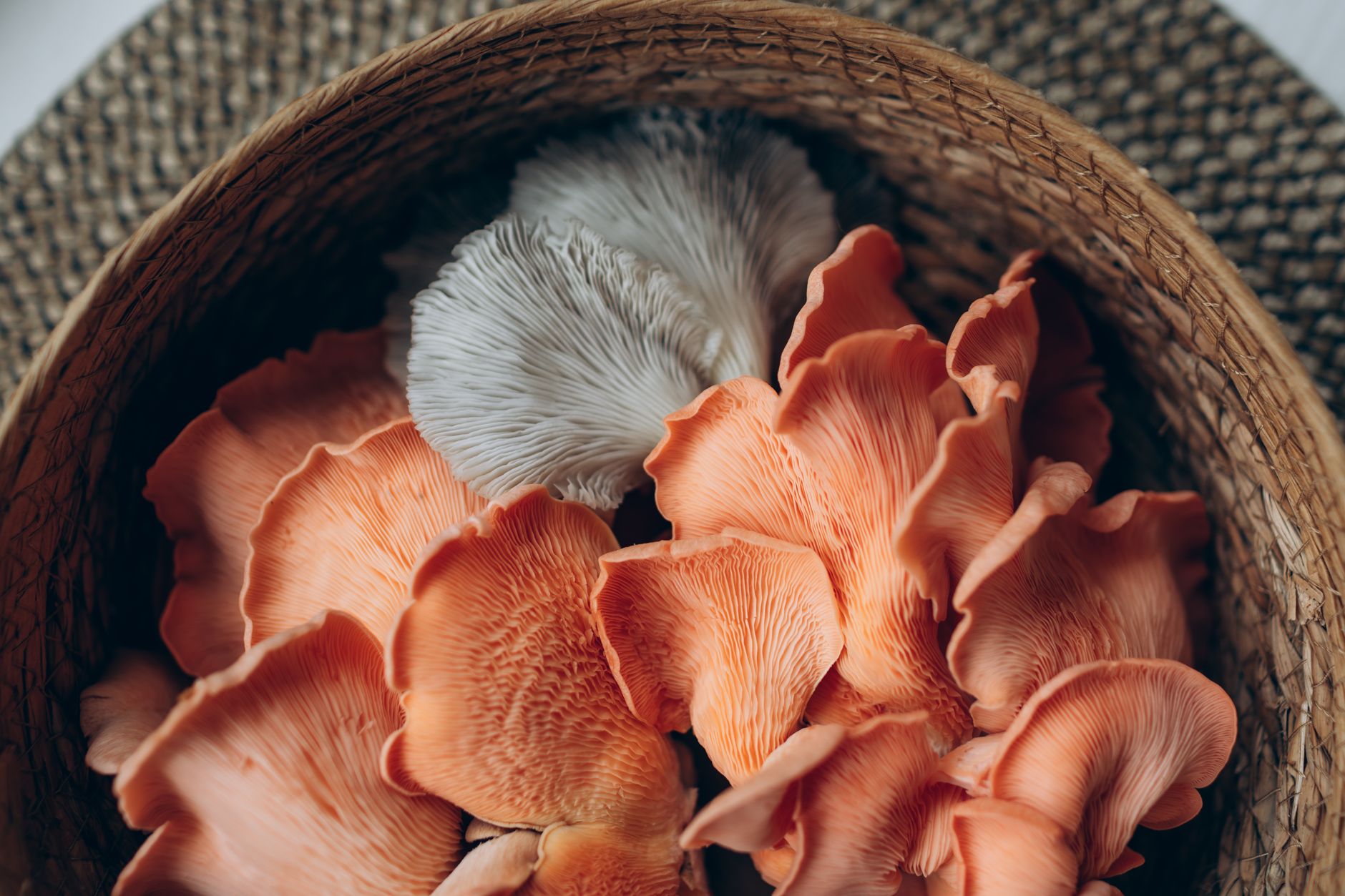
What you can do is grow mushrooms that carry interesting color. Pink oyster, golden oyster and blue oyster all deliver vivid caps on ordinary hardwood substrate, and they fruit in weeks rather than years. If you have never grown one, start with a simple oyster mushroom grow and learn how a block behaves. Once you can read colonization and pinning, color selection becomes a fun variable rather than a gamble.
Species choice matters less than environment at that stage. Light cycles, fresh air exchange, humidity and temperature decide whether you get a full flush or a scraggly one. Our mushroom fruiting conditions guide breaks down the ranges most gourmet species prefer, and it is worth reading before you buy anything else.
How Do You Prevent Green Contamination in Your Next Grow?
Prevention is a chain, and green mold only needs one weak link.
Start with clean spawn. Spawn that smells sour, looks dry or shows any color other than white is not worth using. One bad jar can seed an entire shelf. Buy from a vendor with a real reputation and use it within a few weeks of arrival.
Then handle substrate correctly. Straw and sawdust for home grows are usually pasteurized in hot water, with most cultivator guidance holding the material between 160 F and 180 F for about 60 to 90 minutes. Our straw pasteurization walkthrough covers the timing and the cooling step in detail. Penn State Extension publishes cultivation and food safety materials that are worth reading alongside any home method, and its guidance is a good sanity check on temperatures and handling.
Sanitation keeps the mold from coming back. Work in a still room, wipe surfaces, wear clean clothes and keep pets out of the grow space. Never open a contaminated block indoors. Bag it, remove it, and check the blocks next to it for early white patches that have not turned green yet.
Finally, keep conditions steady. Long wet periods, poor airflow and temperatures above 80 F all favor mold over mushrooms. If your space runs warm, choose species that tolerate heat and shorten colonization times rather than fighting a losing battle.
Frequently Asked Questions
What is the green stuff growing in my mushroom grow kit?
In almost every case it is green mold, usually a Trichoderma species, and it means the block is contaminated. Do not open it indoors because the spores will spread. Seal the block in a bag, remove it, and inspect nearby blocks for early white patches that have not turned green yet.
Are green mushrooms poisonous?
It depends on the species. A few green wild mushrooms, such as the green brittlegill, are eaten in some regions, while others cause stomach upset in sensitive people. The larger danger is misidentification, since several toxic species can look similar in the field.
Can I cut the green part off a block and still eat the mushrooms?
No. Mold filaments and spores extend well past the visible patch, and USDA food safety guidance says to discard moldy food rather than trim around it. A contaminated block is a loss.
How fast does green mold spread in a grow room?
Under warm conditions near 75 F, a colony can go from invisible spores to a fuzzy green patch in 48 to 72 hours. Once it turns green it is releasing spores, so every block in the same space is at risk.
Are there any green mushrooms a beginner can grow at home?
Not really. Nearly all green species are mycorrhizal and need living tree roots to fruit. If you want color in a home grow, pink, golden and blue oyster strains are far more practical and fruit in weeks.
Where can I get a wild mushroom identified safely?
Contact a local mycological club, often listed through the North American Mycological Association, and bring the whole specimen including the base. Never rely on a phone app or a photo alone for a decision about eating something.
Do I have to throw out my equipment after green mold?
Not necessarily. Plastic tubs, shelves, trays and metal tools can be cleaned and reused. Porous items that cannot be fully cleaned, along with the contaminated substrate itself, should be discarded.
What Should You Remember?
- Green usually means mold in a home grow. A fuzzy green patch on a block is contamination, not a mushroom.
- Discard contaminated blocks instead of trimming around the mold, and bag them before they leave the room.
- Real green mushrooms exist in the wild, but nearly all of them are mycorrhizal and cannot be grown on sawdust.
- Pasteurize substrate properly, holding straw or sawdust at roughly 160 F to 180 F for 60 to 90 minutes.
- Watch the first 72 hours after spawning, when green mold can outrun slow mushroom mycelium.
- Never eat a wild mushroom without a positive in-person identification from an expert forager.
- Chase color with oyster strains if you want visual variety without the contamination risk.
This article is for general information only. Mushroom identification and consumption carry health and safety risks , never eat a wild mushroom unless positively identified by an expert, and follow sterile technique and food-safety guidance for home grows.